

You’ve probably seen the videos. People opening free boxes of skincare or getting paid thousands to film a thirty-second clip on their phone.
It looks like a dream, but if you’re trying to break into User-Generated Content (UGC) this year, you’ve likely realized it’s not as “easy” as most influencers make it sound.
The truth is, the UGC landscape in 2026 is louder and more competitive than ever.
But here’s the good news: brands are actually spending more on creators than they were three years ago.
They just aren’t looking for “influencers”—they’re looking for people who know how to sell.
Why Your Experience Level (Actually) Matters Right Now
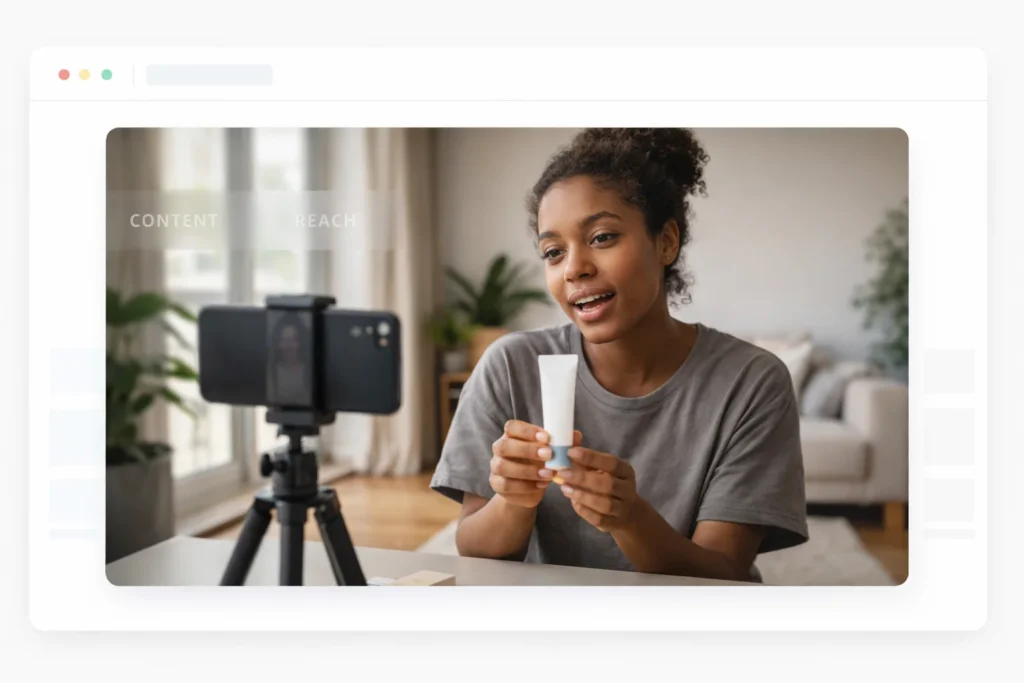
In the early days of UGC, you could land a deal just by having a ring light and a TikTok account.
Those days are gone. Today, brands are much more selective because they’ve been burned by bad creators who don’t understand marketing.
When you’re a beginner, your biggest hurdle isn’t your follower count—it’s your “proof of concept.”
Even if you have zero paid deals under your belt, you have to show that you understand lighting, pacing, and hooks.
It’s a bit of a Catch-22, right? You need deals to get experience, but you need experience to get deals.
To bridge that gap, you have to treat your first few weeks like a free internship.
You should be filming products you already own just to prove you can handle a camera.
The Biggest Misconception About UGC in 2026
If you think UGC is about being a “mini-celebrity,” you’re going to struggle.
The biggest mistake beginners make is confusing UGC with influencer marketing.
- Influencers are paid for their reach*—their audience.
- UGC creators are paid for their *content.
The brand takes your video and runs it as an ad, or posts it on their own page. They don’t care if you have ten followers or ten million.
This is actually your superpower. It means you don’t have to spend years “building a brand” or showing your face every day if you don’t want to.
You just need to be a good videographer and a persuasive storyteller. If you can make a viewer stop scrolling, you are valuable.
How to Start UGC in 2026 – 4 Steps
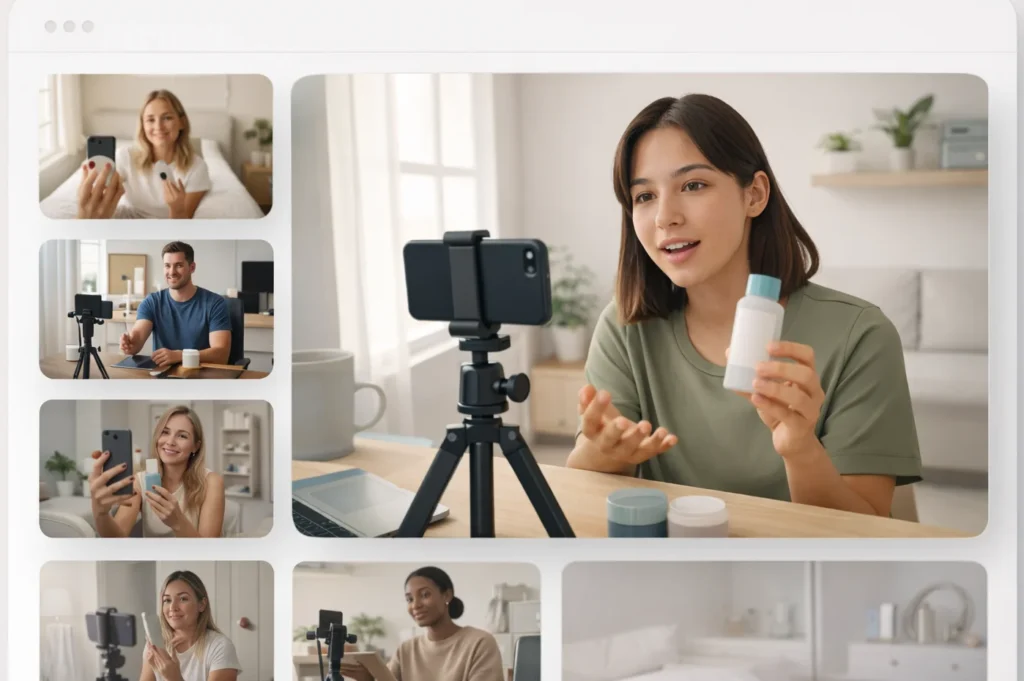
Step 1: Research Before You Spend a Dime
Before you buy a fancy camera or a expensive lighting kit, you need to do your homework.
Look, the “aesthetic” of 2026 has shifted. People are tired of over-edited, perfect-looking ads. They want “lo-fi” content that feels like it was sent by a friend in a group chat.
Spend a few days scrolling through the TikTok Creative Center or the Meta Ad Library.
Search for brands in niches you love—like beauty, tech, or home goods. Look at what kind of ads they are actually running.
Pay attention to the first three seconds. What did they say? What was the “hook”? If you can’t identify why a video made you stop scrolling, you aren’t ready to film your own yet.
Step 2: The “Bare Minimum” Equipment List
You do not need a $2,000 Sony camera to start. In fact, most brands prefer the look of an iPhone or a high-end Android because it feels more authentic to the platform.
Here is what you actually need:
- A smartphone with a decent camera: Clean your lens. I’m serious. A greasy lens ruins more deals than bad lighting ever will.
- Natural light: Find a window. North-facing light is your best friend because it’s soft and consistent.
- A basic tripod: You can find these for $20. You need stable shots. Nobody wants to watch a shaky video that looks like it was filmed during an earthquake.
- Simple editing software: CapCut is the gold standard for UGC right now. It’s free, powerful, and easy to learn.
Step 3: Starting with Gifting and PR
Look, I know you want to get paid. We all do. But when you’re starting from zero, “gifting” is your best foot in the door.
This is where a brand sends you a product for free in exchange for content.
A lot of “gurus” will tell you never to work for free. I disagree. When you have no portfolio, you have no leverage.
Gifting allows you to practice on real products without the high-pressure stakes of a $500 contract.
Reach out to small businesses on Instagram. Keep your pitch short. Tell them you love their product and offer to create one “concept video” for them to use on their socials.
Once you have 3 to 5 of these videos, you officially have a portfolio.
Step 4: How Beginners Really Get Paid Deals
Once you have a portfolio, it’s time to stop waiting for brands to find you. You have to go to them.
In 2026, the best places for beginners to find paid work aren’t actually the big “creator platforms”—it’s direct cold pitching and Upwork.
Platforms like Upwork are great because brands are actively posting jobs with a set budget.
It takes the guesswork out of it. When you pitch, focus on the problem the brand has.
Don’t say: “I want to make a video for you.” Instead, say: “I noticed your recent TikToks aren’t using trending hooks. I’d love to create three high-energy videos for you that focus on increasing your click-through rate.”
See the difference? You’re offering a solution, not just a service.
Moving Beyond “One-Off” Deals
The real money in UGC isn’t in filming one video for $150. It’s in retainers.
This is when a brand pays you a flat monthly fee to produce a set amount of content every month.
To get to this level, you need to show the brand that your content actually works.
If a video you made for them performs well, send them a screenshot of the engagement.
Use that data to say, “Hey, this style really resonated. Let’s do four more like this next month.”
This is how you turn a side hustle into a full-time income. You stop chasing new clients every day and start building deep relationships with a handful of brands that value your work.
Understanding the “Red Flags” in Contracts
As you start getting offers, you’re going to see some weird stuff in contracts. The most important thing to look for is “Usage Rights.”
If a brand pays you $200 for a video, they usually only have the right to post it organically.
If they want to put money behind it and run it as an ad (whitelisting), they should be paying you more.
Also, watch out for “perpetuity” clauses. If a contract says they own your face and content forever, across all universes, for all time… run. Or at least, ask for a lot more money. Usually, a 6-month or 12-month usage agreement is the standard.
Wrapping Up
Starting UGC in 2026 is a marathon, not a sprint. It’s about more than just hitting record on your phone; it’s about becoming a creative partner for the brands you work with.
Don’t get discouraged if your first ten pitches get ignored. Every “no” is just practice for the “yes” that will eventually pay your bills.
Keep filming, keep studying the ads that grab your attention, and most importantly—just start.
The truth is, the only way to fail at UGC is to stop creating.
Top AI UGC Video Platforms

Insense
Creator-Led UGC Platform
- Access real content creators
- UGC for ads and organic content
- Creator collaboration tools
- Campaign performance tracking

Predis.ai
AI Social & UGC Video Creator
- AI-generated short videos
- Social media ad creatives
- Auto captions and hashtags
- Multi-platform formatting

Tagshop.ai
AI-Generated UGC Video Ads
- AI avatars for UGC-style videos
- Shoppable video experiences
- Ecommerce-focused workflows
- Fast and scalable production

Synthesia
AI Avatar Video Platform
- Text-to-video generation
- Professional AI presenters
- Multi-language support
- Brand-safe output

MakeUGC
AI UGC Ads for Social Media
- UGC-style ad videos
- Optimized for TikTok & Reels
- No filming required
- Rapid creative testing

MagicUGC
Instant AI UGC Videos
- Automated UGC ad creation
- AI-driven workflows
- Minimal setup required
- Ad-ready exports

Taggbox
UGC Collection & Display
- Collect UGC from social platforms
- Moderate and approve content
- Embed UGC on websites
- Strengthen trust and social proof
FAQs
Do I need to be "pretty" or "aesthetic" to do UGC?
Absolutely not. In fact, "real-looking" people often perform better for brands because they are more relatable. Brands are looking for moms, students, professionals, and people of all ages and body types. The "average" person is the most effective salesperson.
How much should I charge for my first paid video?
For a complete beginner, a standard rate is usually between $100 and $200 per video. As you get more data and can prove your videos convert, you can easily scale that to $400 or $500 per video.
Can I do UGC without showing my face?
Yes! This is called "Faceless UGC." You focus on overhead shots, "hand modeling," and voiceovers. It is a slightly smaller market, but there are plenty of brands (especially in tech and home organization) that actually prefer it.
Is the UGC market too saturated in 2026?
The market for mediocre creators is saturated. The market for creators who understand marketing, psychology, and high-quality editing is still wide open. If you are willing to learn the "business" side of it, you'll be ahead of 90% of people.
Related Posts


Pasive Marketer is a digital publication dedicated to AI tools, SaaS software, digital marketing, and online business growth. We create in-depth reviews, comparisons, tutorials, and expert guides to help entrepreneurs, marketers, and businesses discover the best software solutions and make informed purchasing decisions.