

Who Can Become a UGC Creator?
The short answer is: almost anyone with an internet connection and a digital device can become a UGC creator.
The democratization of content creation is arguably the most significant trend driving the creator economy.
This accessibility stems from several key factors that have eliminated traditional gatekeepers and lowered the technical and financial hurdles that once defined media production.
The Ubiquity of Tools and Connectivity
In 2024, approximately 5.5 billion people are online, representing about 68% of the world’s population.
This figure rose by 227 million users from the previous year alone, indicating an ongoing expansion of digital access, especially in developing regions.
Complementing this, an estimated 4.3 billion people – over 54% of the global population – owned a smartphone by late 2023. These two statistics alone underscore the massive potential pool of UGC creators.
A smartphone is no longer just a communication device; it is a portable studio, equipped with high-resolution cameras, often sophisticated editing applications, and direct connectivity to global publishing platforms.
This means billions of people can instantly capture, edit, and share videos, photos, and written content without requiring specialized equipment or technical expertise.
The cost barrier has effectively been removed, allowing everyday individuals to engage in sophisticated content production at virtually no financial outlay beyond their monthly internet plan.
From Niche to Mainstream: The Creator Explosion
The global number of individuals who self-identify as content creators has surged dramatically, reaching over 200 million worldwide as of 2023, a fourfold increase from around 50 million in 2020.
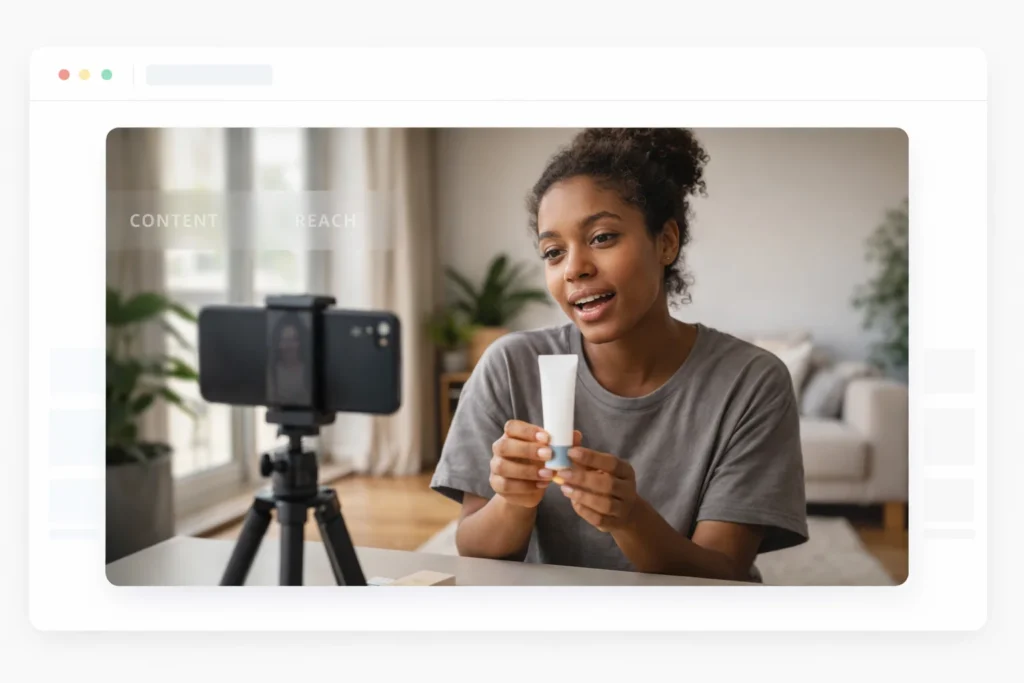
This explosive growth reflects UGC’s transition from a fringe activity to a mainstream pursuit.
Major social media platforms like YouTube, Instagram, and TikTok, among others, entirely rely on this continuous influx of user-generated material.
The sheer volume of content is staggering; for example, YouTube users uploaded approximately 500 hours of video every minute in 2022, amounting to about 720,000 hours daily.
This marks an astonishing 8,200% increase from the 6 hours per minute uploaded 15 years prior. Similarly, Instagram users share an estimated 95 million photos every day.
These figures illustrate not just the capacity for anyone to publish content, but the actualization of that capacity on an unprecedented scale.
Demographic Inclusivity: All Ages, Genders, and Backgrounds
UGC creators shatter traditional demographic molds. Content creation exhibits near gender parity, with approximately 51.9% identifying as female and 48.1% as male in 2023.
While younger generations, particularly Gen Z, show a prominent inclination towards creator careers—with one survey finding 25% of U.S. Gen Z planning to become influencers—older demographics are also rapidly joining the ranks.
The emergence of “grandfluencers,” individuals over 60 years old who cultivate significant social media followings, exemplifies this trend. For instance, the “Retirement House” TikTok collective, composed of seniors in their 70s and 80s, has amassed over 4.6 million followers by creating comedic skits and participating in viral challenges.
This demonstrates that neither age nor traditional career paths dictate who can succeed in UGC; rather, creativity, relatability, and a unique perspective are the primary currencies.
Creators come from all walks of life—students, stay-at-home parents, factory workers, or even potato-farm laborers, as famously exemplified by Nathan “Doggface” Apodaca, whose viral TikTok video led to brand recognition and gifts.
This diverse demographic representation ensures that UGC reflects the multifaceted realities of global society, fostering authenticity and broad appeal.
Requirements to Become a UGC Creator: Passion, Persistence, and a Smartphone
Unlike traditional professions that often demand specific degrees, certifications, or extensive experience, the requirements for becoming a UGC creator are remarkably minimal.
The primary prerequisites are more about intrinsic motivation and consistent effort than formal qualifications.
Minimal Technical Barriers
As highlighted, the most advanced technical requirement for many forms of UGC is a smartphone.
Modern smartphones provide excellent video and photo capabilities, robust editing tools (both built-in and third-party apps), and direct interfaces to all major social media platforms.
The ease of use is continuously improving, with platforms actively developing user-friendly features like templates, filters, and AI-powered editing to simplify content creation.
This technological accessibility means that professional production studios are no longer necessary to create engaging content; the focus has shifted entirely to the content itself rather than its technical polish.
The ability to learn new tools is also readily available.
Aspiring creators can find countless tutorials, often created by other UGC creators, on platforms like YouTube that cover everything from video editing techniques to strategies for growing an audience.
These resources, coupled with community forums and in-app analytics offered by platforms, provide a self-directed learning ecosystem that further lowers the barrier to entry without requiring formal education or costly training programs.
Creativity Over Credentials
In the UGC space, originality and authenticity often outweigh technical perfection or professional credentials. Viewers connect with genuine stories, unique perspectives, and relatable personalities.
Viral sensations like Khaby Lame, who achieved global fame on TikTok without uttering a single word, demonstrate that innovative ideas and universally understood expressions can resonate deeply with audiences.
Similarly, Candace Payne, the “Chewbacca Mom,” became a global sensation not for her production quality, but for her infectious joy and authentic reaction to a simple toy.
This emphasis on creativity means that anyone with a unique talent, a compelling story, or a specific area of expertise can find an audience, regardless of their background or formal training.
Consistency and Persistence are Key
While starting is easy, building and maintaining an audience typically requires consistent effort and persistence. The average creator takes approximately 6.5 months to earn their very first dollar from online content, and it can take around 17 months to generate a liveable income.
This highlights that success in the creator economy is rarely instantaneous; it is often the result of sustained engagement, learning from audience feedback, and adapting to platform trends and algorithms.
The competitive landscape, with millions of pieces of content uploaded daily, necessitates a strategic approach and dedication to continue producing fresh, engaging material.
Earning Potential for UGC Creators: A Spectrum from Hobby to High Income
The earning potential for UGC creators is diverse, ranging from supplemental income for hobbyists to substantial livelihoods for top-tier professionals.
While the overall “creator economy” is a significant and growing market, the distribution of wealth within it is highly skewed.
The Size and Growth of the Creator Economy
The broader creator economy, encompassing various monetization avenues like ad revenue, brand sponsorships, affiliate marketing, and direct fan support, was valued at roughly $191 billion in 2023.
Projections indicate robust annual growth of about 22.5%, with the market expected to exceed $528 billion by 2030.
This impressive growth signals increasing opportunities for creators to monetize their content and for businesses to invest in UGC-driven marketing strategies.
The Reality of Earnings: A Pyramid Structure
Despite the overall growth, the financial rewards are not evenly distributed. The vast majority of UGC creators are what might be termed “micro-creators” or hobbyists.
Approximately 162 million creators globally have fewer than 10,000 followers, categorized as “amateurs,” while only about 45 million have audiences exceeding 10,000, considered the “professional” tier.
Fewer than 2% of creators boast over 100,000 followers. This data reveals a clear pyramid structure, where a small percentage of creators capture the lion’s share of revenue and attention.
Specifically:
- Only about 10% of influencers earn $100,000 or more annually.
- A sobering statistic indicates that 97.5% of YouTube creators do not earn enough from the platform to surpass the U.S. poverty line (approximately $12,000 per year).
This reality underscores that while content creation offers a viable path to income, becoming a high-earner or achieving financial independence through UGC is challenging and requires significant effort, strategic planning, and often, a degree of luck.
Many creators view it as a part-time endeavor or a hobby; about two-thirds of creators engage in it part-time or solely for enjoyment, with around 46.7% working full-time on content, 42.7% part-time, and 10.6% engaging just for fun.
This demonstrates that content creation is accessible and fulfilling for many without the expectation of significant financial gain.
Monetization Avenues: Diverse but Competitive
Monetization for UGC creators stems from numerous sources:
- Advertising Revenue: Share of ad revenue from platforms like YouTube.
- Brand Sponsorships: Direct payments from brands for promoting products or services.
- Affiliate Marketing: Earning commissions on sales generated through unique links or codes.
- Fan Subscriptions/Donations: Platforms like Patreon or Twitch allow direct support from loyal fans.
- Merchandise Sales: Selling branded products or custom items.
Each avenue presents its own challenges and opportunities, but all typically require a consistent, engaged audience to be truly lucrative.
The competitive nature of the creator economy means that even with diverse monetization options, standing out and building a dedicated following remains the biggest hurdle for most aspiring creators.
Impact of UGC on Businesses: Trust, Influence, and Performance
User-generated content has become an indispensable element of modern business strategy, primarily due to its unparalleled ability to foster trust, influence purchasing decisions, and enhance marketing performance.
Building Trust and Authenticity
Consumers overwhelmingly perceive UGC as more authentic and trustworthy than traditional branded content.
Surveys consistently show that 60% of consumers consider UGC the most authentic form of content, and shoppers are nearly 2.5 times more likely to view UGC as genuine compared to content produced directly by brands.
This authenticity gap is profound: official advertisements are often viewed with skepticism, whereas content from real users, showing products in everyday contexts, carries a stamp of credibility.
This preference for peer-generated content stems from a desire for transparent, unbiased information, which UGC inherently provides.
Significant Influence on Purchase Decisions
The trust engendered by UGC directly translates into measurable influence on consumer purchasing behavior.
A striking 79% of individuals report that UGC highly impacts their purchasing decisions, a significant increase from 60% just a few years prior in 2017.
In stark contrast, only 13% rate brand-produced content as equally influential.
This means UGC is approximately six times more influential than branded advertisements in swaying consumer choices. The power of social proof is also evident: nearly 40% of shoppers state they will not purchase a product if there are no user reviews or photos available online.
This “no UGC, no purchase” effect highlights the critical role UGC plays in building confidence and validating product choices for prospective buyers.
Enhanced Marketing Performance and ROI
Businesses are acutely aware of UGC’s effectiveness, leading to a strategic shift in marketing investments.
86% of retailers believe that integrating authentic UGC into their advertisements and content would significantly improve campaign performance.
The data supports this belief with tangible results:
- Ads featuring UGC achieve approximately four times higher click-through rates (CTR) compared to average ads.
- Email campaigns incorporating UGC materials show up to a 73% higher CTR.
This demonstrable improvement in engagement and conversion rates is driving marketing budgets towards UGC. A trend shows that 82% of companies are reallocating or considering reallocating paid ad spend towards owned and earned content, including UGC.
By amplifying customer voices and integrating authentic user content, brands not only boost their marketing metrics but also foster stronger community ties and brand loyalty.
The spontaneous, organic nature of UGC provides a continuous, diverse stream of content that an in-house marketing team would struggle to replicate at scale, offering a cost-effective and highly impactful content strategy.
Conclusion: An Open Invitation to Create
The landscape of content creation has been irrevocably altered, moving from a specialized endeavor to a universally accessible activity.
The answer to “Who can become a UGC creator?” is, unequivocally, anyone with an internet connection, a digital device, and a willingness to share.
The global explosion in creator numbers, coupled with the ubiquity of smartphones and simplified publishing platforms, means that nearly everyone possesses the tools to contribute.
While turning content creation into a lucrative career remains a challenge for the majority, the opportunity for self-expression, community building, and even modest income is open to all, regardless of age, background, or professional credentials.
For businesses, this translates into an unprecedented resource for authentic engagement, profound consumer trust, and significantly enhanced marketing efficacy.
The continuing growth of the creator economy suggests that this trend will only accelerate, making the role of the everyday user as a content creator increasingly central to both individual and commercial success.
This profound shift lays the groundwork for understanding the diverse categories and motivations of UGC creators, which will be explored in the subsequent section.
Frequently Asked Questions
Do UGC creators need professional equipment?
Professional equipment is not required in most cases. Platforms such as TikTok confirm that mobile-recorded content is acceptable when it meets basic technical standards.
Can students or part-time workers become UGC creators?
Students and part-time workers often participate in UGC creation because work is project-based. This aligns with the flexible creator economy structure described by Harvard Business Review.
How do brands verify UGC creators?
Brands verify creators through sample reviews, identity checks, and contract documentation. These steps follow standard digital vendor verification practices
Is UGC creation limited to social media platforms?
User-generated content (UGC) is also used in eCommerce product pages, email campaigns, and paid ads. Shopify documents these multi-channel use cases in its commerce marketing resources.
Related Posts



Pasive Marketer is a digital publication dedicated to AI tools, SaaS software, digital marketing, and online business growth. We create in-depth reviews, comparisons, tutorials, and expert guides to help entrepreneurs, marketers, and businesses discover the best software solutions and make informed purchasing decisions.